
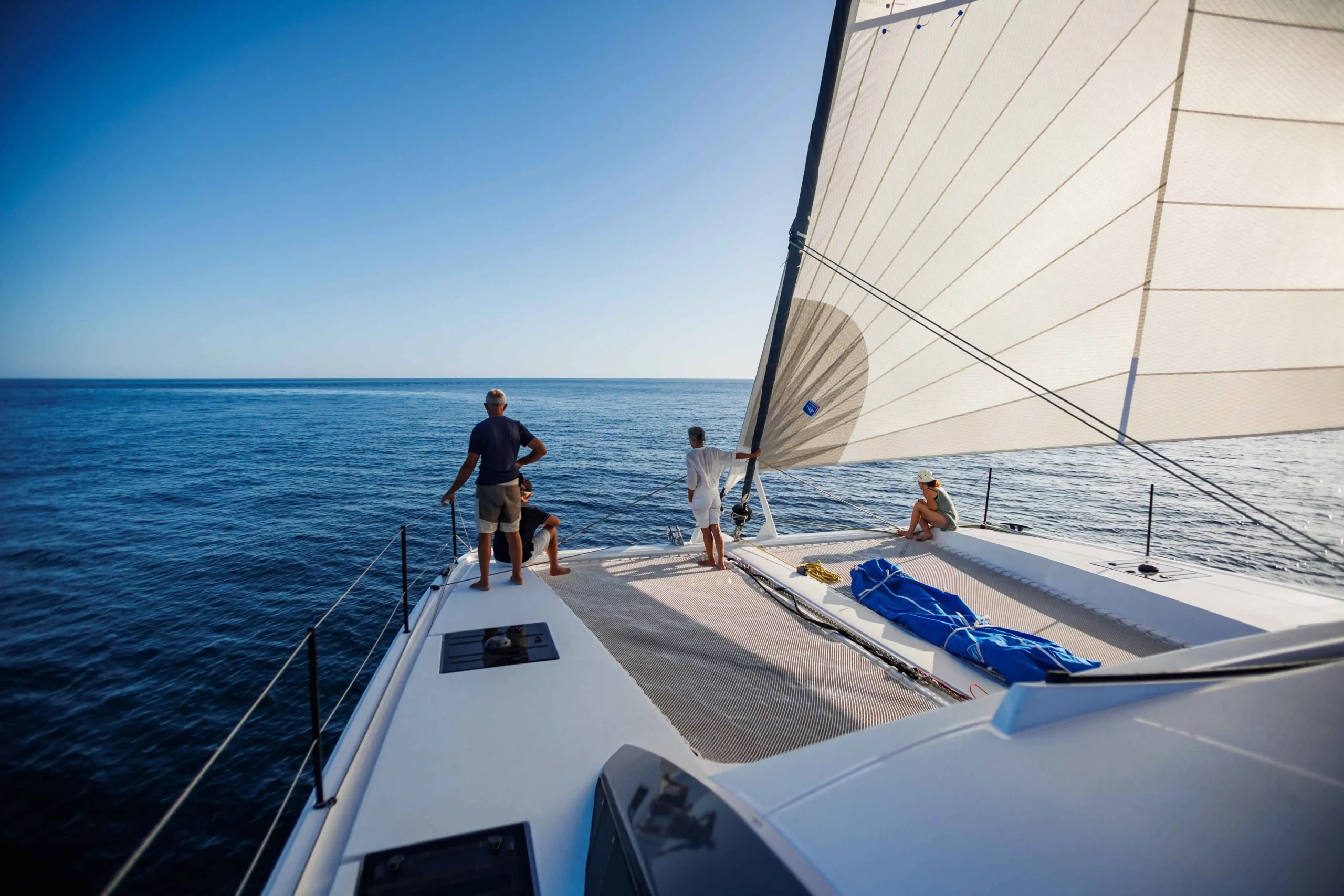
A sailing tour of the Atlantic is always an exceptional adventure. Whether travelling solo, duo or small group, some steps can be shared with other additional team members. To benefit from the experience of a seasoned sailor, to get help in key moments, to make some of the trip live to family or friends... or to meet enthusiasts thanks to a fellowship for teammates.
In this article, our team gives you some tips to integrate a new crew into your Blue Water Sailing in Atlantic and sailing.
The good reasons to welcome a crew on an Atlantic sailing tour
The advantages of a complementary crew
Whether you leave alone or several, from the English Channel, the Atlantic or the Mediterranean, the Atlantic Ocean sailing tour includes some long and delicate stages. There are transoceanic navigations – between the Canary Islands and the Caribbean, between the Caribbean and the Azores or between the Azores and Europe, the crossing of the Gulf of Biscay, the passage of Cape Finisterre, the Orca area off Gibraltar and Portugal...
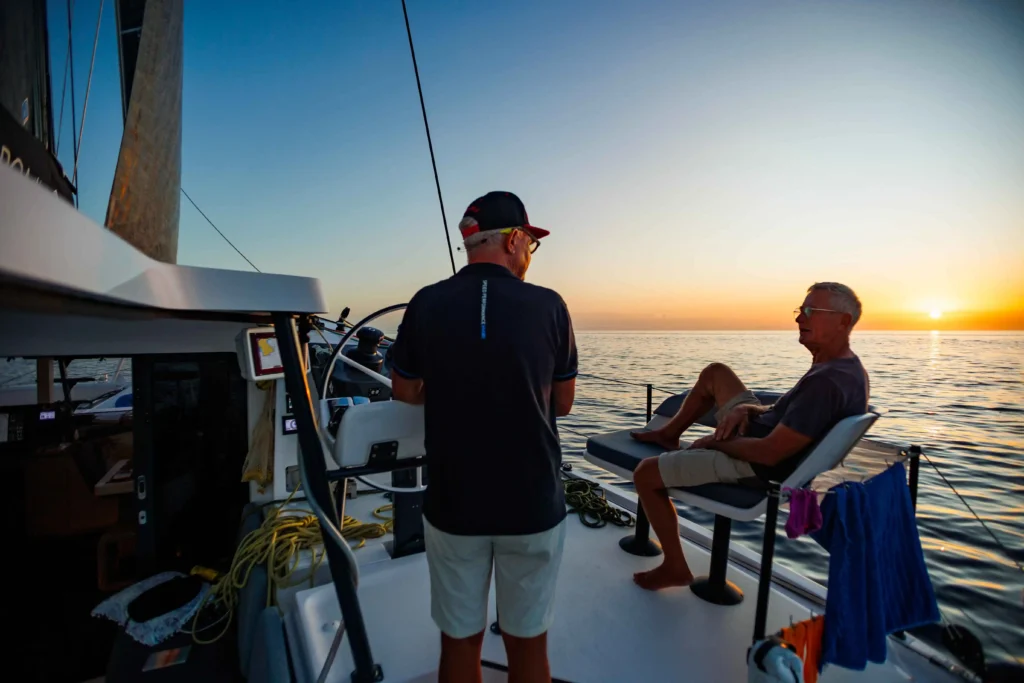
On several parts of the road, additional team members can make the difference: from the start of the trip, a professional and graduate skipper can, for example, help you to acquire the skills you lack, to find your rhythm and trust.
On other stages of your Atlantic sailing tour, more or less experienced crew will relieve your load, allowing you to better manage life on board, sailing, the day before, but also your fatigue. The pace will be easier to maintain over the long term.
Finally, embarking a team member(s) on your Atlantic tour will also be an opportunity to share your adventure with friends or other passionate sailors, making it an even richer experience.
The different passengers
To accompany you or to share your sailing cruise in the Atlantic, you can embark different team members:
An experienced professional or marine skipper – with a sophisticated knowledge of navigation
A volunteer from a grant to teammates or in search of boarding at one of your places of call – more or less experienced
Children, family and friends – accustomed to sailing or uninitiated travel.
Preparing for life with new crew members
Steps before hosting a team member(s)
One of the first steps is to take stock of your needs: do you want to take advantage of technical skills or physical reinforcements, or do you want to share your adventure with others? You can choose the right profile in function.
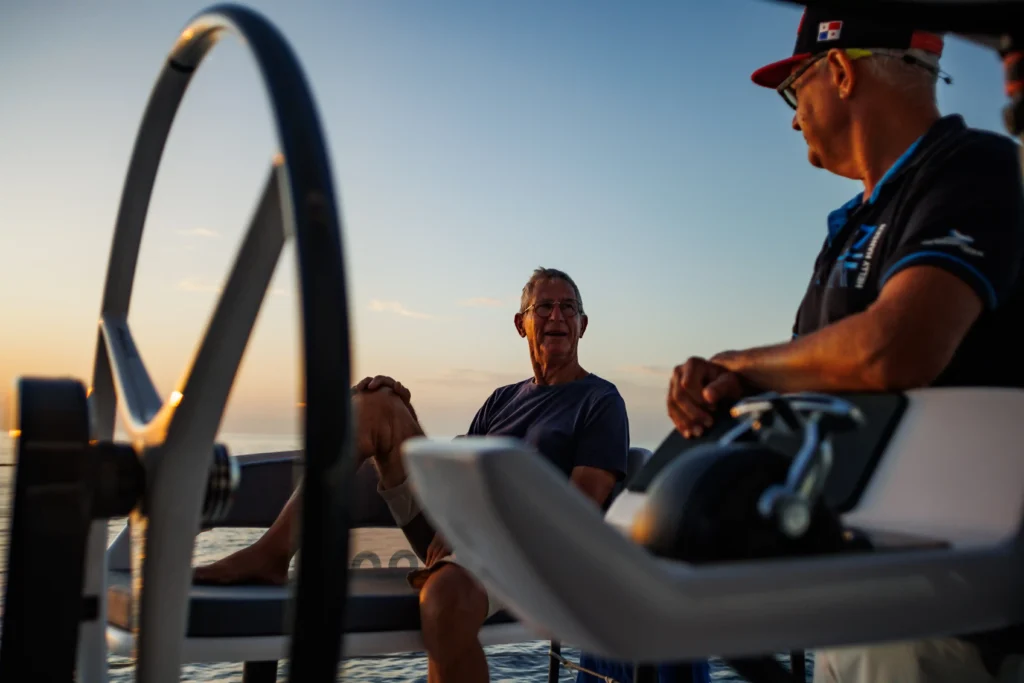
If the additional crew is unknown to you, you will arrange one or more virtual or real meetings to ensure compatibility. Before a transatlantic, you can do a sailing test together, coastal. This type of linkage is often facilitated by a fellowship for teammates, which allows you to quickly find a profile adapted to your needs.
Take advantage of the exchanges before boarding to formalize everyone's expectations. Some crews even make a team-mate contract to prevent problems that may occur on board. Address sensitive topics: the level of participation, the pace of life, respect for security rules, management of common costs, privacy...
Be clear about your expectations: What is the expected involvement in manoeuvres and life on board? What are the non-negotiable points?
You will organise embarkation and disembarkation according to geographical and seasonal criteria: you will choose precise points, easy to reach for you – on your sailing route – and for your future teammates – for example, by plane. Ideally, a place where it will be easy to land and refuel. Why not Madeira, the Canary Islands, Cape Verde, Martinique, Saint Martin or the Azores?
For sailing from the Atlantic and other shipping, you will also pay attention to the sailing season – if possible, outside the cycle season.
Organize passenger reception
From a practical point of view, you will have to prepare the spaces of the boat: dedicate one or more cabins to welcome the crew members, store, plan the vests to be made available... A sailboat organized to sail as a couple, for example, is not necessarily suitable for a larger crew.
The need for water, food, energy and waste storage will have to be anticipated. If you welcome a child on your Atlantic sailing tour, you may also need to secure the boat.
Climb the habits of the edge... for novelty
As the owner(s) of the sailboat and initiator(s) of the voyage, you will have to be psychologically ready to share your living space and accept a different dynamic. Be aware that you will need to « leave room »In every sense of the word, to those who are about to embark with you.
But don't be afraid: well prepared, sharing an Atlantic tour by sailboat is far from a constraint. It is even an adventure that can be very pleasant!
The smooth running of your Atlantic navigation
Distribution of roles
On one Atlantic tour or another Blue Water Sailing, the fair division of tasks on board is a must. Upon boarding, you will communicate the safety rules clearly and define the role of everyone – whether they are a professional skipper, passionate volunteer, friend or family member!
Navigation, watchkeeping, kitchen, maintenance, weather, cleaning... You will divide the roles of the edge according to the skills, so that everyone feels responsible, involved and valued. You will always be able to adapt the system according to weather conditions, for example, or the particular health condition of a team member.
Managing tensions and preventing conflicts
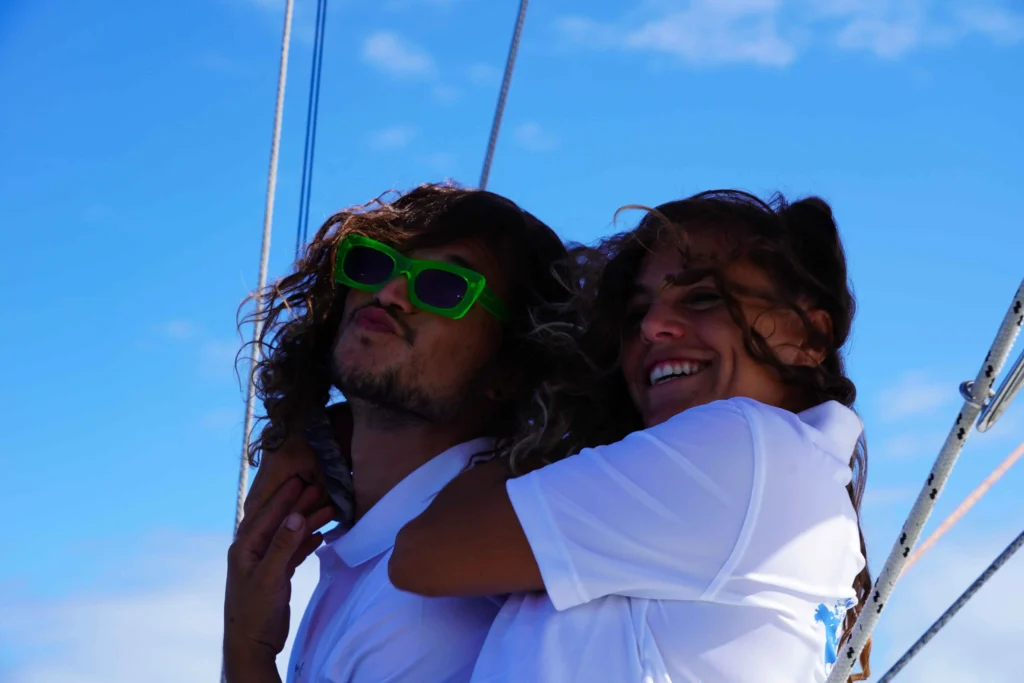
Even with the Alizés, not everyone has the same tolerance to navigation. Even between friends or family, life on board and conditions can cause some tensions. Offer personal space, comfort and individual moments to everyone: not everything has to be lived together!
On a route like a sailboat tour of the Atlantic, it is common to embark crew from a variety of horizons. Also think that your international partners may not have the same way of expressing themselves.
After each navigation or step, take stock during a collective debriefing: you can understand together what worked or not, thank those who had a positive role, and identify better ways of doing things.
A partner didn't meet his commitments or had a bad behavior? Always communicate kindly, but dare say things clearly. If there is no improvement and the situation becomes problematic, you can make the decision to reduce the cruise time or land the person concerned – if necessary, by adjusting your itinerary.
Receive team members, both administrative and medical
To embark on your boat in the Atlantic, your team-mates will need the same documents as you, the owner(s) of the boat: a valid international ID and one or more visas – depending on the intended stopovers.
On the health side, they will be able to provide travel insurance and they will provide you with the most important information: medical history, current treatments, drug and food allergies... You will adapt the onboard pharmacy accordingly.
Advice applicable to all blue water cruising
Here we discussed the boarding of crew members as part of an Atlantic sailing tour. But, of course, these tips of anticipation, organization and communication are valid on all boats, for any route!
If you are considering recruiting browsers to share your adventure, consider consulting a fellowship for teammates This is a valuable resource for getting in touch with offshore enthusiasts.
You still have questions about welcoming crew members at your next time Blue Water Sailing ? The Grand Large Services team is at your disposal to help you with your project.